Make appointments and order prescription refills by email at:

kirkwoodvets@kirkwoodvets.com

Kirkwood Animal Hospital's Facebook page

Like us on Facebook

-

Make appointments and order prescription refills by email at:

kirkwoodvets@kirkwoodvets.com


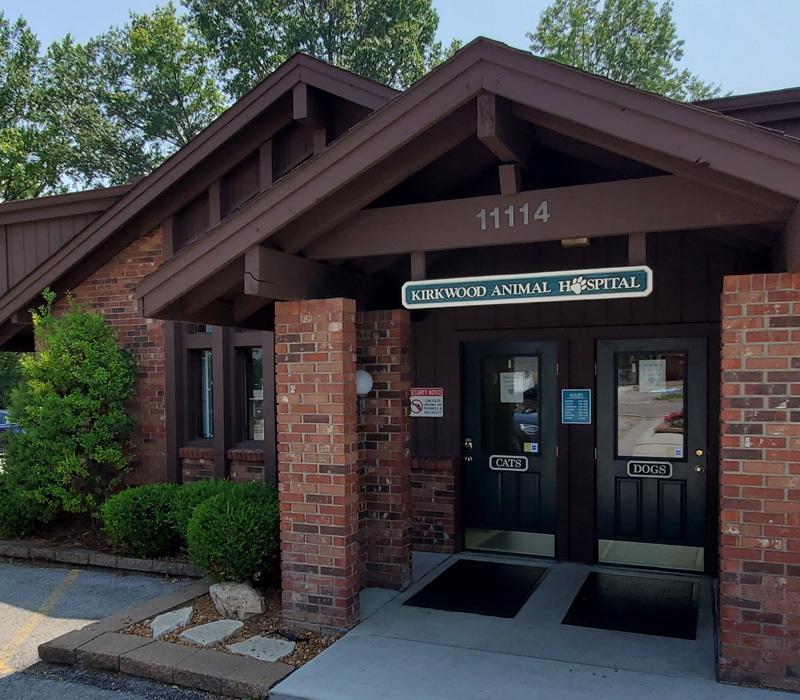
11114 Manchester Rd.

Kirkwood, Mo. 63122


Celebrating Our 40th Anniversary

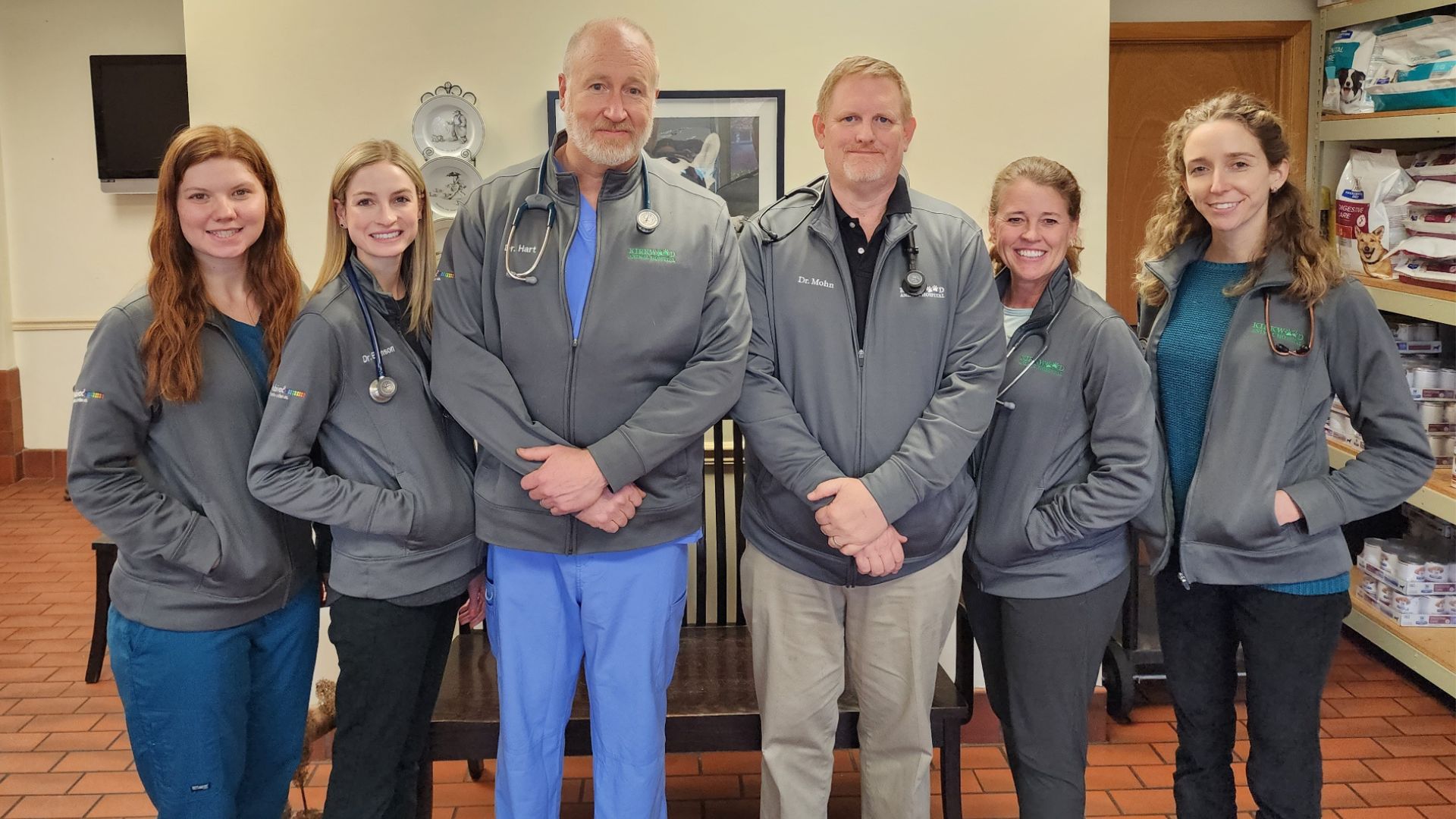
7 Doctors with 110+ years of combined

 practice experience

314-965-2660

 ACL Rupture

Pain Removed. Life Improved. KAH is proud to be offering Therapeutic Laser treatments for our patients!   Our Companion Laser is manufactured by LiteCure.  A LiteCure Laser is used in St. Louis Cardinals Clubhouse! 


What we have learned in 41 yrs of repairing ACLs

Anterior Cruciate Ligament (ACL) rupture and surgical repair

 “Your dog is limping and has likely ruptured their ACL”

“Now What?”

 Please remember that timely treatment is the primary concern.   Understand that once a joint has been injured that joint will never be as good as before the injury!  However, we can make it much better with surgery.

 ACL rupture is a huge problem in Veterinary medicine.  ACL injuries occur at a greater rate in dogs than in people.  Most of the time the ACL injury is a result of a degenerative process, with most ACL injuries there is no history of any trauma.  In the majority of cases, that we treat surgically the ACL is 2-3 mm. in diameter.  In a normal dog the ACL measures 6-7 mm in diameter.  We do not know why this degeneration is occurring.  We have treated dogs as young as 6 months old with an ACL injury.

bullet

The ACL is the main ligament in the knee.  It prevents the femur from riding over the top of the tibia when the knee is loaded.  “Loaded “is when weight is applied to the knee.   When the ligament is ruptured, you can palpate a drawer movement in the knee.  You can diagnose an ACL rupture by feeling this drawer movement.  In most cases, this requires anesthesia to obtain complete relaxation.  You cannot directly diagnose an AC L rupture with a radiograph.  We will take radiographs on your dog just before surgery to make sure there are no further problems with the leg.

bullet

It is an important fact to know that 50% of dogs that rupture one ACL will rupture their other ACL.  Once the ruptured ACL is diagnosed, we are no longer worried about this leg we are worried about the other leg.  If a dog ruptures both ACLs at one time it will be very difficult for them to walk.  So it is essential that the dog’s owner limit their dog’s activities until the first ACL surgery is complete.

bullet

 At KAH we think it is essential that you do surgery on your dog’s leg.  If you do not do surgery on the leg and the other ACL ruptures, you may be faced with a dog that cannot get around and will face a long expensive recovery process when two knee surgeries are done at one time.  Electing to not do surgery on the first ACL rupture is not a good option.  Eventually (4-6 weeks) the dog will walk on the leg again but it will likely limp a lot, the muscles of the leg will atrophy and severe osteoarthritis will develop in the knee.

bullet

At KAH we want our clients to know a little history of ACL surgery.  Just as in people, this very serious injury needs to be dealt with properly.  Many different surgeries have been tried over the last 50 years and none of them is perfect.  New procedures are being developed all the time.  Surgeons are always looking for a better procedure.  None of the procedures is perfect.  At KAH we think there are three acceptable procedures.  A TPLO is a procedure that should be done by a boarded surgeon.  This procedure cuts the bone of the knee and a stainless steel plate is put on to the bone to correct the mechanics of the knee.  This procedure costs about $3500 at a specialty clinic.  Surgeons are doing a newer procedure called a Tightrope, it costs about $2500.  KAH has preformed an extra-capsular lateral fabellar suture technique for over 41 years with improvements over the years and this procedure costs about $1750.  During this procedure, we will check your dog’s meniscus with a scope to see if it is damaged.  When the meniscus needs repair there will be extra charges associated with this repair.   Included in the cost is one package of “3 Therapeutic Laser Treatments” in order to reduce pain and speed up the healing process. All of the procedures have good outcomes.  The more expensive surgeries have been associated with more complications than what we do at KAH.  It is important to remember that your dog has a serious knee injury.  The dog’s knee will never be the same again, no matter what surgery is performed.  The surgeries are all designed to stabilize the knee and reduce the amount of arthritis that develops in the knee as the dog ages.

bullet

Expectations- this surgery is all about expectations.  You can expect that your dog will limp on their leg for 4-6 weeks after the surgery.  You can expect that there will be intermittent problems with lameness and limping for at least 6 months after the surgery, as scar tissue forms in the leg the scar tissue will be stretched when the dog is active and this can cause temporary discomfort.  In the end it will be worth it as less scar tissue will form in the knee than if surgery is not done.

bullet

Post-operative physical rehabilitation is important.  For the first 10 days after surgery your dog should do very little, remember we are worried about the other knee not the one we did surgery on.  After 10 days we will ask you to start walking your dog very slowly on a leash for one mile a day.  It is essential that the walk be very slow.  Dogs normally bear 60-70% of their weight on the front two legs.  When dogs start to walk fast or run they shift even more weight to their front legs.  This shifting of weight away from the back legs prevents proper rehabilitation of the knee.  When your dog is running around the back yard, they are not rehabbing the leg.  It is a good idea to walk the dog on a leash in tight circles, clockwise and counter clockwise to ensure even usage of muscles.   If hills and steps are encountered while walking it is ok to do them slowly as this helps rehabilitate the dog’s quadriceps muscle.  After one month, we will examine your dog again to ensure recovery is going well.  We will use post-operative analgesics, anti-inflammatory drugs, glucosamine supplements and Therapy laser treatments to help with rehabilitation.

Home New Puppy or Kitten? Other Sites of Interest SEARCH PAGE Our Staff Paraprofessional Staff Our Doctors Adult Canine Stem Cell Therapy Pet Rx Drive-Thru Dog Flu Medicine Anesthesia Check List for Surgery & Anesthesia Surgery Laser Surgery Therapeutic Laser Pain Control in Dogs More Laser Info ACL Rupture Cats and the indoor lifestyle KAH Breeders of Distinction Flea & Tick Control Heartworms Radiology Ultrasound Endoscopy Dentistry Laboratory Testing Rx Diets Kitten Adoption Center Frequently Asked ?s Community Services Foreign Missions Disclaimer/Copyright Otis Ray Bendick

© 1998 Kirkwood Animal Hospital